Showing posts with label sport. Show all posts

Thursday, January 19, 2012

Lessons from Greek mythology


[Orestes, middle, attacks Clytemnestra, right]

I spotted this in the sports section of the paper last year, but what with one thing and another didn't get around to posting it. It just goes to show how useful a knowledge of our classical heritage can be in everyday life.
In June, in reference to the adultery committed by the English soccer player Ryan Giggs with his brother's wife, TFF posed the throwaway question, "Is it worse for a man to sleep with his brother's wife, or his wife's sister? Discuss." Well, I never. I was overwhelmed with responses. Most tended to agree with me that "brother's wife", is worse; some said I would have to ask an AFL player of the ilk of Wayne Carey; although David Scott identified that the worst of all would be when your brother's wife is also your wife's sister.

The last word, however, goes to reader Bruce Hyland, who has what I think is an uncomfortably well-thought-out and referenced position on this. "The Greeks," he writes, "held that an offence against a blood relative was far more serious than an offence against a relative who was not blood-kin. Hence, Clytemnestra's murder of her husband, Agamemnon, was less heinous than Orestes's revenge killing of Clytemnestra, because Clytemnestra and Agamemnon were not blood relatives, whereas Orestes was Clytemnestra's [and Agamemnon's] son and, thus, the closest blood-kin. It follows that sleeping with one's brother's wife is beyond the pale, whereas sleeping with one's wife's sister may be regarded as a trivial peccadillo."

Thursday, December 02, 2010

certamen


Here's a bit of a competition for the weekend - what's going on in the above picture? A bit of background: it's a photo of a mosaic I saw recently at the Getty Roman Villa in Los Angeles. I was quite excited when I saw it as I immediately recognised it as one of my favourite moments from the Aeneid. If you think you know what it is leave me a comment. If you've got no idea what it might be feel free to use your imagination. Perhaps you could even write a humorous caption.

Wednesday, September 08, 2010

Till Birnam wood do come to Dunsinane...

With Australian politics in the news a bit lately, I thought I’d join in the action. Back when she was merely deputy PM, Julia Gillard famously said regarding her own leadership aspirations:
"There's more chance of me becoming the full-forward for the Dogs than there is any chance of a change in the Labor Party."
This kind of statement should always be taken with a grain of salt, and (if you ask me) belongs in the same category as ‘the leader has my full support’, which, at least in NSW politics, indicates that the knives are out, and a leadership change is imminent.

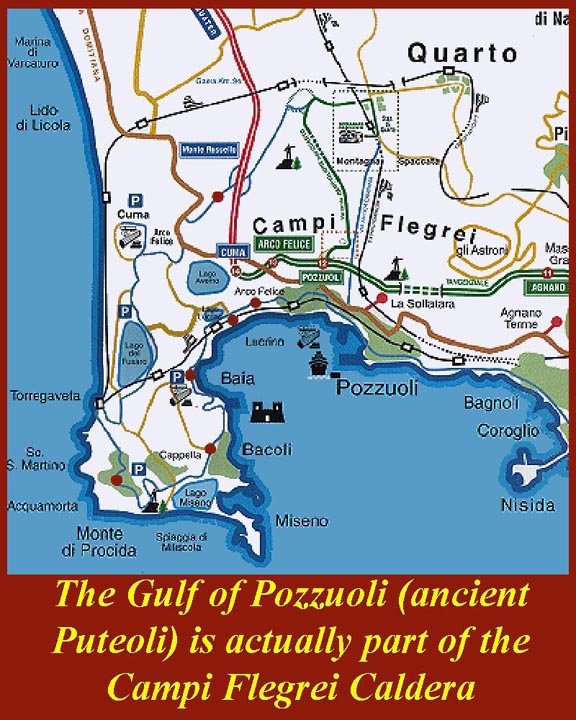
According to Suetonius, the Roman Emperor Caligula (aka Gaius) was once told a similar thing by the emperor Tiberius' astrologer – that he had as much chance of becoming emperor as riding a horse across the Gulf of Baiae. So, when in due course Caligula did become emperor in 37 AD, he apparently constructed a huge temporary floating bridge out of ships, spanning the two miles from Puteoli to Baiae, and rode his horse across it.

Wednesday, June 16, 2010

Poculum Mundi

With the World Cup in full swing, I thought it would be appropriate to re-post the Roman First XI put together a few years ago by Mike Salter. I reckon they'd have at least as good a chance of Australia of making it through to the next round.


GK: Tacitus. Lets nothing through.

RB: Horace. Has the patience and intelligence for the full-back role, while not being afraid to go on the attack now and then when circumstances demand.
CB: Suetonius. Always at the centre of things (he was an imperial secretary, after all), and passionately organised in his approach.
CB: Tertullian. A passionate defender (of Christianity, but that's not to say he would be incapable of other kinds of defence).
LB: Martial. Unobtrusive, favours the short ball, and has no hesitation in chopping down the pretty boys on the opposition side.
RM: Juvenal. Like all true satirists, a right-winger by inclination.
CDM: Vitruvius. The architect of the side.
CAM: Catullus. For the playmaker role, you really need someone who can pull surprises, and this bloke was full of them.
LM: Cicero. Hardworking in the service of the team (as he never ceases to remind his team-mates).
STR: Virgil. His skill in finished phrases would surely make him a fine finisher.
STR: Ovid. Adds grace, enterprise and elegance to any side, and an ideal foil to his fellow hexameter-merchant in attack.

This list was originally published in the comments back here. The ancient Greek first XI can be seen in action here.

Tuesday, August 12, 2008

Olympics

I'm finding it a bit hard to get excited about the Olympics at the moment, but there are a few interesting things around the internet at the moment which talk about the ancient Olympics.

About.com has a good introduction to the ancient Olympics, as well as information on more specific questions, such as were women involved and what was training like.

The Perseus exhibit is pretty cool too, especially the stories about particular athletes whose athletic feats have been passed own to us.

Then there's this page which desribes the emperor Nero's hilarious visit to the Olympic Games in 67AD- as a participant, not a spectator!

Friday, May 16, 2008

Socrates

I read an article the other day comparing the late Jack Gibson to Socrates. Here are a few excerpts:

Jack Gibson was rugby league's Socrates. Just as the 5th century BC Greek father of philosophy taught by asking questions, Gibson - Australia's greatest football coach - encouraged thought with epigramatic one-liners.

Take the brawl at St George Leagues Club in 1970, when Gibson was the Dragons' coach. Gibson... turned to his young winger from Grafton, whom he called "Boy Carr".

"Boy Carr, I've got a question for you... If you put a mug in a tuxedo, put him in a Rolls-Royce and open the door, what steps out?"

Carr was unable to provide an immediate answer and surrendered, saying, "I don't know."
Gibson said: "A mug."...

...like Socrates, who taught Plato, who taught Aristotle, Gibson inspired Wayne Bennett, who mentored Craig Bellamy.

Here's a bit about the real Socrates:

Socrates is the saint and martyr of philosophy. No other great philosopher has been so obsessed with roghteous living. Like many martyrs, Socrates chose not to try to save his life when he probably could have done so by changing his ways. According to Plato, who was there at the time, Socrates told the judges at his trial that '[y]ou are mistaken... if you think that a man who is worth anything ought to spend his time weighing up the prospects of life and death. He has only one thing to consider in performing any action- that is, whether he is acting rightly or wrongly.' But, unlike many saints, Socrates had a lively sense of humour; this sometimes appeared as playful wit, sometimes as pregnant irony. And, unlike the saints of any and every religion, his faith consisted not in a reliance on revelation or blind hope but in a devotion to argumentative reason. He would not be swayed by anything less.

[Socrates, Anthony Gottlieb, 1997. p1]

Thursday, February 14, 2008

gratias maximas...


Last Friday I had the great pleasure of spending the afternoon at the cricket, thanks to the exceedingly generous girls from last year's HSC class. Australia won, it didn't rain, Adam Gilchrist and Michael Clarke both scored fine half-centuries, Sangakkara put up some spirited resistance, Nathan Bracken took five wickets, and I had a pie with sauce for dinner. A great night all round. vobis gratias maximas do.

Tuesday, November 06, 2007

Melbourne Cup


With the Melbourne cup on today, I thought would be a good time to share Ovid’s tips for finding love at the races.

Proximus a domina, nullo prohibente, sedeto,
Iunge tuum lateri qua potes usque latus;
Et bene, quod cogit, si nolis, linea iungi,
Quod tibi tangenda est lege puella loci.

No one can stop you from sitting as close as you want to your mistress; squash up side by side, as close as you can. Even if she’s shy, the girl will have to let you touch her, because the benches are so crowded.

Hic tibi quaeratur socii sermonis origo,
Et moveant primos publica verba sonos.
Cuius equi veniant, facito, studiose, requiras:
Nec mora, quisquis erit, cui favet illa, fave.

Then you should look to start some kind of friendly conversation, and let the occasion provide your first words. ‘Whose horses are they?’ you should ask, enthusiastically: and whichever horses she backs, you should back too, without delay.

Utque fit, in gremium pulvis si forte puellae
Deciderit, digitis excutiendus erit:
Etsi nullus erit pulvis, tamen excute nullum:
Quaelibet officio causa sit apta tuo.
Pallia si terra nimium demissa iacebunt,
Collige, et inmunda sedulus effer humo;
Protinus, officii pretium, patiente puella
Contingent oculis crura videnda tuis.

And if by chance (as sometimes happens) a speck of dust should fall into the girl’s lap, brush it away with your fingers: and even if there’s nothing there, brush that nothing away. Anything should be an opportunity for your courtship. If her cloak comes undone and trails on the ground, pick it up and carefully lift it from the filthy dirt. If the girl consents you’ll get the reward for your efforts straight away- a glimpse at her legs.

Respice praeterea, post vos quicumque sedebit,
Ne premat opposito mollia terga genu.
Parva leves capiunt animos: fuit utile multis
Pulvinum facili composuisse manu.
Profuit et tenui ventos movisse tabella,
Et cava sub tenerum scamna dedisse pedem.

Look back to see who sits behind you, to make sure he doesn’t prod her tender back with his knee. Small things please little minds: it’s a good idea to arrange her cushion with your skilful hands. It’s also helpful to fan her gently with your program, and to put a hollow stool under her dainty feet.

(Ovid, Ars Amatoria I.139ff)

Friday, March 23, 2007

Roman First XI


With the cricket world cup in full swing, Mark Waugh has put together his "best Australian team ever". I'd like to know how they would have fared against this team, combining the best players from that powerhouse of World Cricket, the mighty Roman Empire.


1. Livy- Often unfairly typecast as a plodder, Livy was a powerful right-hander who terrorised opening bowlers on pitches around the empire, overwhelming them with the sheer force of his strokes. He could drive with enormous power, though was capable of finer touches as well. With Cicero was among Rome's most prodigous scorers, with a truly amazing output.

2. Virgil (vc)- For fluidity and style it is hard to go past the dashing left-hander from Mantua. He impressed from an early age, and comparisons with the legendary Greek batsman Homer were inevitable. He had the rare ability to score runs quickly and with minimum of effort. His timing was impeccable and he was able to guide the ball through the gaps in the field with unerring precision. He and Livy formed a formidable partnership at the top of the order with their contrasting styles.

3. Tacitus- A truly complete player, Tacitus had great variation of shots and could score fluently on both sides of the wicket, off pace or spin. Coming in at first drop he had the ability to steady the team when an early wicket had fallen, or to score quickly when a more aggressive approach was needed.

4. Juvenal- One of the greatest players of spin Rome has ever seen, Juvenal was known in particular for his elegant strokemaking square of the wicket and through the covers. He also played well off his pads, and was lightening-quick between the wickets. In the field he was an athletic fieldsman within the circle, capable of creating spectacular run-outs, and a part-time finger-spinner.

5. Cicero (c)- Cicero's early career showed him to be a daring stroke-maker with command over a wide range of shots, but when he was dropped, he removed the hook shot from his repertoire and reinvented himself as a determined and tenacious middle-order batsman, often scoring runs through sheer force of will. As captain Cicero was famous for his composure under pressure (who could forget his famous sledge against Catiline in the 63BC world cup semi final "You just dropped control over the republic, mate."- before going on to score a century), and was a handy off spin-bowler through the middle overs, until a shoulder injury cut short his career.

6. Horace- Rome's greatest finisher- and some would say her greatest ever player. Horace had a habit of coming in late in the order, under pressure, and getting the job done. Was a master of batting with the tail, and producing the best out of them. A lively infielder and useful medium-pacer, Horace was also the ultimate team man and on one occasion played through the pain of a broken thumb to secure a century for himself and victory for Rome, practising what he preached- dulce et decorum est pro patria mori.

7. Martial (wk)- Though often criticised for his unconventional technique by wicket-keeping purists, Martial brought far more to the game than simply his skill with gloves. Behind the stumps he was a master of sledging, and could put opposition batsmen off their games with a single barbed, yet elegant, elegaic couplet. He was also a powerful lower order hitter, and often came to Rome's aid in the final overs.

8. Catullus- The cheeky leg-spinner was often in trouble off the field and developed a love-hate relationship with the media, but on the field he let the ball do the talking and mystified batsmen with his stunning array of deliveries and magical control of his craft.

9. Ovid- A master of the mysterious art of swing-bowling, Ovid was lethal swinging the new ball away from right handers. A genuine pace bowler with a great yorker and deceptive slower ball, Ovid was also a handy lower order batsmen.

10. Plautus- Every team needs a prankster, and Plautus fits the bill nicely. His larrikin on-field persona and habit of tongue kissing team-mates in the ear belied a keen cricketing brain, fiercesome pace, and a ferocious bouncer.

11. Caesar- A line-and-length bowler with uncanny accuracy, Caesar had a phenomenal economy rate. He might not always take wickets, but he could tie up an end, making it hard for batsmen to score and building up the pressure in such a way that batsmen would be forced to take risks of his bowling partners. Caesar also had an annoying habit of talking about himself in the first person at post-match conferences.

Coach: Seneca- The moral philosopher was an inspiration as coach, and particularly encouraging in defeat, with his Stoic 'take-it-on-the-chin, stiff-upper-lip' attitude.