Showing posts with label Caligula. Show all posts

Wednesday, January 19, 2011

Gaius Julius Caesar Augustus Germanicus

I woke up this morning to hear Adam Spencer on the radio asking if anyone knew by what name Gaius Julius Caesar Augustus Germanicus is better known. I pitied the poor fool who rang up to answer "Augustus, the first emperor of Rome" but the next caller was spot on with "Caligula".

He was asking the question in response to this article about the apparent discovery of the emperor Caligula's tomb. The article explains how he was given the name Caligula - as a kid he used to accompany his dad (confusingly known as Germanicus) out to the battlefield, dressed up in a mini-soldier's uniform, including boots. The boots were known as caligae - caligula is a diminutive form meaning 'little boot(s)'. Interestingly the statue of Caligula which led to the discovery of the tomb is wearing a pair of these boots. The learned Rogue Classicum has more on the news, but is cautious (to put it mildly) about the authenticity of the discovery.

The article in the Sydney Morning Herald also trots out all the usual stuff about Caligula, as in this sentence:
After reportedly sleeping with his sisters, killing for pleasure and seeking to appoint his horse a consul during his rule from AD37 to 41, Caligula was described by contemporaries as insane.
The article is decent enough to say that he only 'reportedly' slept with his sisters, but is pretty vague on who Caligula's 'contempories' might be. I'm not much of an expert on any aspect of Roman history, but the biographies of the emperors are generally not straightforward, and a lot of the most sensational stories often have to be taken with a fairly large grain of salt. In Caligula's case, the major sources of information about his life come from Suetonius and Cassius Dio, who are writing about 80 and 180 years respectively after his death. Wikipedia has a pretty good summary of the various sources and their reliability.

Of course, none of the sources portray Caligula as a saint, but he wasn't necessarily as insane and perverted as he's often made out to be, and in fact he seems to have been responsible for some genuine achievements during his reign.

Wednesday, September 08, 2010

Till Birnam wood do come to Dunsinane...

With Australian politics in the news a bit lately, I thought I’d join in the action. Back when she was merely deputy PM, Julia Gillard famously said regarding her own leadership aspirations:
"There's more chance of me becoming the full-forward for the Dogs than there is any chance of a change in the Labor Party."
This kind of statement should always be taken with a grain of salt, and (if you ask me) belongs in the same category as ‘the leader has my full support’, which, at least in NSW politics, indicates that the knives are out, and a leadership change is imminent.

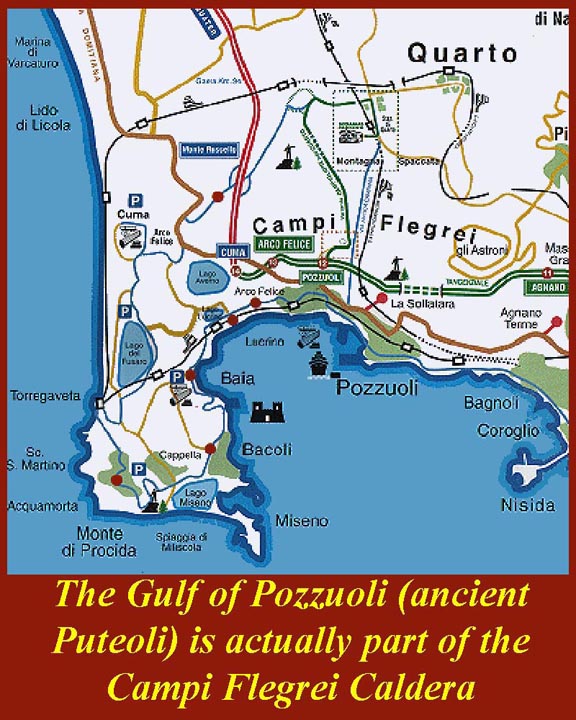
According to Suetonius, the Roman Emperor Caligula (aka Gaius) was once told a similar thing by the emperor Tiberius' astrologer – that he had as much chance of becoming emperor as riding a horse across the Gulf of Baiae. So, when in due course Caligula did become emperor in 37 AD, he apparently constructed a huge temporary floating bridge out of ships, spanning the two miles from Puteoli to Baiae, and rode his horse across it.

Monday, June 02, 2008

hospites Romani

If you could have dinner with three Romans, who would you invite? I was thinking about this the other day, and here is my guest list:

Cicero was my first choice. I suspect that he was a bit of an arrogant git, but there’s no doubt that the man was a genius. From humble(ish) origins he rose to become one of the most influential men in Rome. He was consul in 63 BC, and Julius Caesar invited him to join the first triumvirate (Cicero refused because he hated Caesar, but that’s another story). He had a sense of humour and a bitterly sharp wit, and was incredibly educated- he studied oratory in Athens, and in his later years when he was effectively side-lined from politics he spent his spare time translating Greek philosophy into Latin. He also lived in one of the most interesting periods of time in Roman history- the final years of the republic- and knew lots of fascinating people- not only Caesar, but Antony, Octavian, Cleopatra, Catullus (and Lesbia/Clodia). He didn’t like most of them, but that only makes him a more entertaining guest.

It would be tempting to invite some of Cicero’s acquaintances (perhaps Catullus and Lesbia?) just to watch the fireworks, but in the interest of variety my next guest would be Agrippina, mother of the emperor Nero. Agrippina was one of the last of the fascinating, but troubled, Julio-Claudian family. Her brother was the emperor Caligula, and her uncle (later also her husband) was the emperor Claudius. Caligula didn’t like her much (he sent her into exile) but she had considerable influence over Claudius, and when Nero came to power she was for a time effectively co-emperor. Later Nero grew to resent her, and eventually had her killed. Such a powerful and ambitious woman so closely connected to three different emperors would undoubtedly have a few good stories to tell, though you’d probably need to watch the food closely (she was said to have poisoned Claudius).

I can imagine the conversation at my dinner party getting pretty heavy with those two, and can think of no one better to liven the mood than the poet Ovid. Whereas Cicero’s humour was (I suspect) bitter and vicious, Ovid comes across in his poetry as fun-loving, warm and generous, if sometimes a bit vulgar. At times he is completely over the top and it seems like he has trouble taking anything seriously, though he was by no means a light-weight- in addition to his love poems and manuals he wrote mythological poems (not just the light-hearted Metamorphoses, but the Heroides as well), a kind of historical calendar (the Fasti) and a version of Medea, sadly lost to us. As part of the literary circle of Maecenas he knew many of the other eminent poets of his day (Propertius, Tibullus and Horace for example), and probably Augustus himself. Whether he knew Augustus personally or not he certainly did something to upset him (we don’t know exactly what- it’s one of the things I would ask him if I had the chance), and he was banished from Rome in AD 17 never to return.

That’s my list, who would you invite?

Tuesday, May 13, 2008

books

Every month I get an Abbeys catalogue in the mail- I thought I’d post the reviews of some of the book which looked interesting to me from this month’s catalogue.

Imprimatur11 September 1683, Rome. The citizens of the city wait anxiously for the outcome of the battle for Vienna as Ottoman forces lay siege to the defenders of Catholic Europe. Meanwhile, a suspected outbreak of plague causes a famous Roman tavern to be placed under quarantine. A plot to assassinate the pope and plans to use the plague as a weapon of mass destruction in the battle between Islam and the West are discovered. Drawing on original papers discovered in the Vatican archives, this meticulously researched and brilliantly conceived thriller sheds new light on the power struggles of 17th century Europe, the repercussions of which are still felt today.

Cleopatra: Last Queen of EgyptShe was the last ruler of the Macedonian dynasty of Ptolemies who had ruled Egypt for three centuries. Highly educated (the only one of the Ptolemies to read and speak ancient Egyptian, as well as the court Greek) and very clever (her famous liaisons with Julius Caesar and Mark Antony were as much to do with politics as the heart), she steered her kingdom through impossibly taxing internal problems and against greedy Roman imperialism. Stripping away our preconceptions (many of which are as old as her Roman enemies) in this magnificent biography, Tyldesley uses all her skills as an Egyptologist to give us a rich picture of a country and its Egyptian queen.

A Brief History of the Private Lives of Roman EmperorsBlond’s scandalous expose on the life of the Caesar’s is a must-read for anyone interested in what really went on in ancient Rome. Julius Caesar is usually presented as a glorious general, when in fact he was an arrogant charmer and a swank. Augustus was so conscious of his height that he put lifts in his sandals. But they were nothing compared to Caligula, Claudius and Nero! This book makes fascinating reading, eye-opening in its revelations and endlessly entertaining.

Wednesday, November 29, 2006

equi notissimi

Here are 5 famous horses from antiquity:

Incitatus was the horse of the emperor Caligula. Caligula loved his horse so much that he fed it oats mixed with gold. It lived in a stable made of marble, ate from an ivory manger, slept under purple blankets (purple dye was very expensive at the time), and wore a collar of precious gems. Caligula also tried to make his horse consul (the highest political office)- though this was possibly only because it seemed like a better option than the rest of the Roman aristocracy around at the time.

Bucephalus was the horse of Alexander the Great. Alexander succeeded in taming this fearsome horse when he was only 10 (or possibly 12) years old. Bucephalus served Alexander well in battle, but was eventually fatally wounded at the battle of Hydaspes, where Alexander established a city, called Bucephala (in modern day Pakistan) in honour of his faithful horse.

Pegasus was a mythical winged horse, which sprang from the neck of the monster Medusa when the Greek hero Perseus chopped off her head. Pegasus helped another Greek hero Bellerephon in his fights against the Chimera and the Amazons.

The Mares of Diomedes were four uncontrollable, fire-breathing, person-eating horses belonging to the giant king of Thrace, which Hercules had to steal as one of his 12 labours. Eating made the horses somewhat calmer, so Hercules killed Diomedes and fed him to his own horses. Bucephalus is said to have been descended from these (mythical) horses.

The Trojan Horse was, of course, not a real horse, but a wooden one. It was built by the Greeks after they had tried unsuccessfully for ten years to capture the city of Troy. The Greeks sailed away from Troy leaving it on the shore, and when the Trojans found the horse they assumed that the Greeks had built it as an offering to the gods and took it inside their city. Unfortunately for the Trojans it was filled with armed soldiers, who snuck out at night, killed the guards and opened up the city to the Greeks who had sailed back under cover of darkness.

[This post is dedicated to Madeline in my year 8 class, the biggest hippophile I know.]