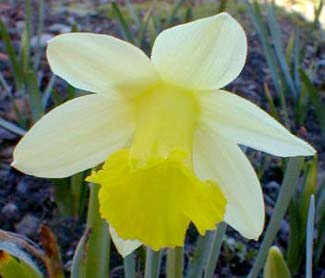
Monday, April 28, 2008

Anzac Day

Mytho-poetic vapours… clouded many a mind during the Gallipoli campaign of 1915: in many ways an attempt to liberate the ‘holy land’ of Attica, so dear to the West’s imagination, from the Ottoman scourge. Young hoplites from Britain, France and the dominions were sent into battle against walls of flying metal because this place was still an ideal. When the time came to address his troops before their blooding, the romantically minded Commander-in-Chief of the expeditionary force, General Sir Ian Hamilton, invoked the eternal fame of the Homeric heroes. ‘You will hardly fade away until the sun fades out of the sky and the earth sinks into universal blackness’ he declared, ‘for already you form part of that great tradition of the Dardanelles which began with Hector and Achilles…’

By the time of the Great War, glamorous myth had replaced hard-edged history as another armada sailed for the Hellespont. The Englishman Patrick Shaw-Stewart, combatant and classicist, took an old copy of Herodotus on the boat to Gallipoli. ‘The flower of sentimentality expands childishly in me on classical soil,’ he wrote. ‘It is really delightful to bathe in the Hellespont looking straight over to Troy’...

The much-loved Rupert Brooke, sailing to the Dardanelles- he was to die off Skyros of an untreated mosquito bite two days before the dawn landing of 25 April 1915- also pictured the impending battle in the colours of a glorious past:

They say Achilles in the darkness stirred…
And Priam and his fifty sons
Wake all amazed, and hear the guns,
And shake for Troy again.

The officers and soldiers of the Australian Imperial Force were hardly immune to the resonance of their surroundings. An Australian contingent, pushing out their trenches at Gallipoli, chipped away at the buried remains of an ancient settlement, but there was no time for amateur archaeology and enemy fire propelled them on. Charles Bean, the classically educated war correspondent and official military historian, later kicked at the dirt and uncovered a coin of ancient provenance. The Australians may not have penned war poetry of lasting merit, but their waggish doggerel offers a distinctly ironic counter to the high-toned myth of war:

An then ol’ Joe- ‘e was a well read chap-
Starts tellin’ us about a ten years scrap
They ‘ad in Troy which wasn’t far away
So Joe made out, from where we were that day.
A bloke ‘ad pinched a bonzer tabby, then
‘Er own bloke came to get ‘er back again,
An all ‘is cobbers came to see fair play,
An’ in the end they got ‘er safe away.
But Bill ‘e didn’t think a scrap could start
And last ten years about a blanky tart;
No Jane ‘e’d ever met was worth a brawl.
There must be something else behind it all.

Within a few short years of the homecoming the Anzac experience of blood, mud, and gore had been burnished into the much more brilliant Anzac legend; the hard-bitten Australian digger was openly likened to both the Greek citizen-soldier and the Homeric warrior of myth. For the author of The Trojan War 1915, a member of the Australian Field Ambulance on Gallipoli, the digger was already a reincarnated Greek hero:

Homeric wars are fought again
By men who like old Greeks can die;
Australian backblock heroes slain
With Hector and Achilles lie.

Dating Aphrodite; modern adventures in the ancient world
Luke Slattery, pp 3-8

Tuesday, April 22, 2008

dies romae natalis

[The forum Romanum from the Palatine hill, where Romulus (supposedly) recieved his favourable omen from the gods]

I'm meant to be on holidays, but I couldn't let such an important date go unremarked. Yesterday Rome celebrated its 2761st birthday. There are some great photos of the celebrations at Rome here, here and here.

April 21st, 753 B.C. is the traditional date for the founding of the city by Romulus and Remus; this is how Livy recounts events:


Ita Numitori Albana re permissa Romulum Remumque cupido cepit in iis locis ubi expositi ubique educati erant urbis condendae...

Romulus and Remus, after the control of Alba had passed to Numitor in the way I have described, were suddenly seized by the desire to found a new settlement on the spot where they had been exposed and subsequently brought up...

Intervenit deinde his cogitationibus avitum malum, regni cupido, atque inde foedum certamen coortum a satis miti principio.

Unhappily the brothers' plans for the future were marred by the same source which had divided their grandfather and Amulius- a lust for power. A disgraceful quarrel arose from a matter in itself trivial.

Quoniam gemini essent nec aetatis verecundia discrimen facere posset, ut di quorum tutelae ea loca essent auguriis legerent qui nomen novae urbi daret, qui conditam imperio regeret, Palatium Romulus, Remus Aventinum ad inaugurandum templa capiunt.

Since they were twins and no distinction of age could be made between them, they determined to ask the gods under whose care those places were, to declare by means of augury who should govern the new city, once it had been founded, and give his name to it. Romulus took to the Palatine Hill, Remus to the Aventine, in order to take the auguries.

Priori Remo augurium venisse fertur, sex voltures; iamque nuntiato augurio cum duplex numerus Romulo se ostendisset, utrumque regem sua multitudo consalutauerat: tempore illi praecepto, at hi numero auium regnum trahebant. Inde cum altercatione congressi certamine irarum ad caedem vertuntur; ibi in turba ictus Remus cecidit.

Remus, so the story goes, was the first to receive a sign- six vultures; and no sooner was this announced than double the number of birds appeared to Romulus. The followers of each promptly hailed their own master as king, one side basing its claim upon priority, the other upon number. Angry words ensued, followed by blows, their anger turned to violence, and there, in the crowd, Remus was struck and fell down dead.

Volgatior fama est ludibrio fratris Remum novos transiluisse muros; inde ab irato Romulo, cum verbis quoque increpitans adiecisset, "Sic deinde, quicumque alius transiliet moenia mea," interfectum. Ita solus potitus imperio Romulus; condita urbs conditoris nomine appellata.

There is another, more common story, that Remus, making fun of his brother, jumped over the newly-built walls, whereupon Romulus killed him in a fit of rage, adding the threat, 'So perish whoever else shall overleap my battlements.' In this way Romulus gained sole possession of power; the city, having been founded, was took its name from its founder.

Friday, April 11, 2008

Holidays

[Mt Ossa, Cradle Mountain National Park, Tasmania]

I'm off on holidays again, so there won't be much posting action for the next fortnight. no exciting plans this time round, so I'll leave you with a photo of mt Ossa from my last trip.

Mt Ossa is the highest mountain in Tassie, named after a famous mountain in Greece. According to Greek mythology (and my trusty Oxford Companion to Classical Literature) Otus and Ephialtes piled Mt Pelion on top of Mt Ossa, and Mt Ossa on top of Mt Olympus in their attempts to overthrow the gods.

The phrase 'heaping (or piling) Ossa upon Pelion' is sometimes used today to refer to an extremely difficult, but ultimately fruitless, task.

Wednesday, April 09, 2008

mel

I was given a very kind gift by one of my year 11 students on Monday; a jar of honey collected by her dad from the bee-hive in their backyard. I love honey, and I've been eating it on my sandwiches all week. Honey was an important ingredient in Roman cooking, as it was the only form of sweetener they had; the Roman poet Vergil calls honey 'the gift of heaven' (caelestia dona).

In fact Vergil dedicated a whole book of his Georgics (pastoral poems, written to instruct his readers on various aspects of agriculture) to bee-keeping. You might think bees are not a particularly grand topic for Rome's greatest poet, but Vergil explains in his introduction that the life of bees has a heroism all its own:

Admiranda tibi levium spectacula rerum
magnanimosque duces totiusque ordine gentis
mores et studia et populos et proelia dicam.
In tenui labor; at tenuis non gloria, si quem
numina laeva sinunt auditque vocatus Apollo.

I shall tell of the displays of these tiny creatures, worthy of your admiration, and of their great-hearted leaders, and the customs of the whole race with their order and their pursuits and their peoples and their battles. The work may be slight, but the glory will not be slight, if the gods' will allows it and Apollo hears my prayers.

Later Virgil describes a hive of bees as a well-ordered, ideal community

Solae communes natos, consortia tecta
urbis habent magnisque agitant sub legibus aevum,
et patriam solae et certos novere penates,
venturaeque hiemis memores aestate laborem
experiuntur et in medium quaesita reponunt.

They are the only creatures to bring up their offspring communally, they share the buildings of their city and they live their lives beneath the shelter of majestic laws, and they are the only creatures to know a country and a fixed dwelling, and in summer, warned of the approaching winter, they prepare for it, and store up the things they have gathered for general use.

Namque aliae victu invigilant et foedere pacto
exercentur agris; pars intra saepta domorum
Narcissi lacrimam et lentum de cortice gluten
prima favis ponunt fundamina, deinde tenaces
suspendunt ceras: aliae spem gentis adultos
educunt fetus, aliae purissima mella
stipant et liquido distendunt nectare cellas.

For some watch over the provision of food, and do their work in the fields, according to their settled contracts; some within the confines of their homes lay down the honey-comb' first foundation with pollen (the tears of Narcissus) and the sticky sap from the bark of trees, then they hang the clinging wax from it: others lead forth the full-grown young, their country's hope, others press the purest honey and stretch their cells with the bright, sweet nectar.

Sunt quibus ad portas cecidit custodia sorti,
inque vicem speculantur aquas et nubila caeli
aut onera accipiunt venientum aut agmine facto
ignavum fucos pecus a praesepibus arcent.
Fervet opus, redolentque thymo fragrantia mella.

There are those to whom it falls to guard the gates, and they take turns to watch for rain and cloudy skies, or they recieve the cargo of those who arrive, or they form a column and drive off the drones, a lazy herd, from their turf. The hive seethes with activity, and the honey gives off the fragrant scent of thyme.

Friday, April 04, 2008

Senior Classics Dinner


I took a group of my year 11 students to the Senior Classics Dinner, at Trinity Grammar School last night. The dinner is organised by the CLTA every year and is always lots of fun. For me it's good to see my Latin teaching colleagues, and for the students it's good to meet other like-minded students from around Sydney, to dress up, to have a nice meal and to play a bit of trivia. The trivia is always fiendishly difficult, here are a few of the questions that I had trouble answering myself*:


What is the literal translation of the names of the following pieces of equipment?

  • stethoscope
  • microphone
  • camera
  • seismograph
  • television
  • hypodermic
With which particular bodies of water were the following types of Naiads associated?

  • Crinaeae
  • Limnades (or Limnatides)
  • Pegaeae
  • Potameides
  • Eleionomae
Which modern day public holidays in Australia fall very close to, or on, the following Roman festivals?

  • Quinquatria (in honour of Minerva)
  • Robigalia (in honour of Robigus)
  • Vestalia (in honour of Vesta)
  • Ieiunium Cereris (Fast of Ceres)
  • Dies Natalis Invicti Solis (Festival of the Invincible Sun god)
I'll give the answers in the comments next week.


[*this may say more about me than the questions]

Tuesday, April 01, 2008

Narcissus

[Narcissus river, Cradle Mountain National Park, Tasmania]


My year 11 class have been looking at some of Ovid's Metamorphoses recently, in particular the stories of Pygmalion and Galataea. Pygmalion is a sculptor who carves a statue so beautiful it seems to be alive. In the story of Narcissus things are the other way round; Narcissus is so beautiful that he is compared to a statue.

hic puer et studio venandi lassus et aestu
procubuit faciemque loci fontemque secutus,
dumque sitim sedare cupit, sitis altera crevit,
dumque bibit, visae correptus imagine formae
spem sine corpore amat, corpus putat esse, quod umbra est.
adstupet ipse sibi vultuque immotus eodem
haeret, ut e Pario formatum marmore signum;
spectat humi positus geminum, sua lumina, sidus
et dignos Baccho, dignos et Apolline crines
impubesque genas et eburnea colla decusque
oris et in niveo mixtum candore ruborem...

Here the boy, worn out from his eager hunting and from the heat, lies down, attracted by the beauty of the place and its spring. While he seeks to calm his thirst, another thirst grows, and as he drinks, he is enchanted by the beautiful reflection he saw. He falls in love with a disembodied hope, he thinks that what is but a shadow, is a body. He is amazed by his very own self, and motionless stares at it with fixed gaze, just like a statue made from Parian marble. Lying on the ground, he watches the twin stars, his eyes, and that hair, worthy of Bacchus, worthy of Apollo, and those smooth cheeks and ivory neck, and the glory of his face and its blush, mixed with snow-white radiance


inrita fallaci quotiens dedit oscula fonti,
in mediis quotiens visum captantia collum
bracchia mersit aquis nec se deprendit in illis!
quid videat, nescit; sed quod videt, uritur illo,
atque oculos idem, qui decipit, incitat error.

How often did he did he give vain kisses to the deceitful pool, how often did he sink his arms in to the middle of the waters, trying to embrace the neck he saw there! But he could not find himself in them. what he saw, he did not recognise; but what sees he burns for, and that same illusion which deceives him, excites his eyes.

[Ovid, Metamorphoses, III.413-23, 427-31]

Narcissus eventually wasted away, and was transformed into the flower which is named after him. He also survives in our language today in the word narcissism.